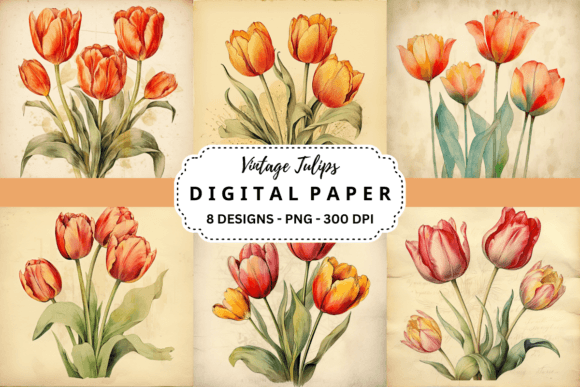
Elevate Your Projects with Vintage Tulips Watercolor Backgrounds
There’s a certain magic in the way watercolor bleeds and blooms on paper—soft, organic, and utterly unique. Now imagine capturing that magic in the delicate, timeless form of tulips. Vintage Tulips Watercolor Backgrounds offer exactly that: a collection of eight high-resolution, digitally rendered scenes that blend the classic elegance of floral artistry with the subtle, textured charm of watercolor. These aren’t just generic flower patterns; they are designed compositions with a distinct personality. The color palettes lean towards muted pastels, soft earth tones, and gentle, sun-faded hues, evoking a sense of nostalgia and refined simplicity. Each background feels hand-painted, with visible paper grain and translucent layers that add depth and authenticity.
The Visual Style and Its Creative Personality
The appeal of these backgrounds lies in their versatility and emotional resonance. They strike a balance between being decorative and functional. The vintage aspect comes through in the slightly desaturated colors and the gentle, often slightly imperfect edges of the tulip petals and leaves. This isn't a sharp, modern vector graphic; it's a texture-rich, artistic asset. The overall feel is romantic, soft, and approachable, making it ideal for projects that aim to convey warmth, craftsmanship, or a touch of rustic elegance. The high resolution of 3600x3600 pixels at 300 DPI ensures that every brushstroke and subtle color gradient remains crisp and clear, whether used as a large-scale print or a detailed digital element.
For designers and creators, this style offers a fantastic way to add visual interest without overwhelming a layout. It provides a strong foundational aesthetic that can guide the rest of a project's design choices, from typography to color accents.
Practical Applications Across Industries
So, where do these Vintage Tulips Watercolor Backgrounds truly shine? Their utility spans a remarkable range of projects, making them a valuable part of any creative's toolkit.
- Digital and Social Media: They are perfect for creating eye-catching social media post templates. A blog header, Instagram story backdrop, or Pinterest pin gains instant character with a textured floral base. For content creators and bloggers, these backgrounds can frame quotes, announcements, or product features in a way that feels curated and professional.
- Branding and Marketing: Small business owners can leverage this aesthetic for brand identity elements. Think beyond just a logo design; consider using these backgrounds for packaging design, shopping bags, thank you cards, or email newsletter headers. For a boutique, florist, wedding planner, or artisanal goods brand, these backgrounds communicate a clear brand personality centered on beauty, nature, and care.
- Print and Editorial Design: The applications in print are extensive. They make beautiful, non-distracting backgrounds for poster and banner design, especially for events like garden parties, spring sales, or art exhibitions. In editorial design, a muted tulip background can add a sophisticated touch to magazine feature pages, book chapter headings, or cookbook layouts.
- Personal Projects and Craft: For hobbyists and crafters, the possibilities are endless. These high-quality PNG files are ideal for scrapbooking, creating custom invitations, designing greeting cards, or even as a base for printable art. The consistent theme across the eight images allows for creating cohesive sets, like a matching invitation, RSVP card, and menu for an event.
- Commercial and Print-on-Demand: Entrepreneurs in the print-on-demand space will find these backgrounds exceptionally useful. They can be applied to products like wrapping paper, journal covers, notebook designs, poster prints, and textile patterns. The commercial license typically allows for such use, making it a practical investment for creating sellable goods.
Making the Most of Your Asset: A Practical Guide
Simply having a beautiful asset isn't enough; using it effectively is key. Here’s how to approach integrating Vintage Tulips Watercolor Backgrounds into your workflow.
First, evaluate the project fit. Does your project's message align with the soft, vintage, floral aesthetic? It's a perfect match for themes of spring, romance, growth, elegance, and nostalgia. It might be less suitable for projects requiring a sharp, futuristic, or minimalist tech feel. The personality of the asset should complement the personality of your brand or message.
Next, consider your typography. This is where modern typography principles come into play. Because the background is detailed and textural, your text needs to be highly legible. A clean, sans-serif font often works best for body copy, ensuring readability against the organic patterns. For headlines, you could pair it with a elegant serif font or a flowing script font, but always test the combination. Place text over the less busy areas of the background, or use a subtle overlay or shape to create a legible text box. The goal is a harmonious font pairing where the background enhances the text rather than competes with it.
Always review the full set. Having eight individual files allows for consistency across a campaign. You can use one background for your main graphic and another, perhaps a lighter or more patterned one, for supporting elements. This creates visual variety while maintaining a cohesive brand identity.
Finally, understand the file specifications. The 300 DPI and large pixel dimensions mean these are truly premium font (or asset) quality. They are designed for high-quality printing and detailed digital work. You can confidently use them for large format prints or zoom into details for web design elements without losing clarity. Always check the licensing for your intended use, especially for commercial projects, to ensure you are compliant.
In the end, Vintage Tulips Watercolor Backgrounds are more than just pretty pictures. They are versatile design assets that can elevate the professionalism and emotional impact of a wide array of projects. By understanding their style and applying them thoughtfully, you can create work that feels both beautiful and strategically sound.