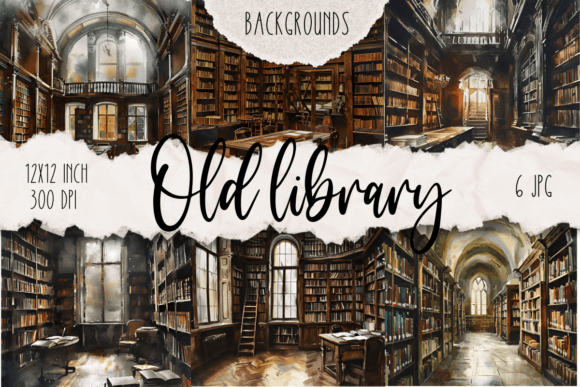
Old Library Backgrounds: Timeless Textures for Modern Design
There's a particular kind of magic in an old library—the soft scent of aged paper, the quiet weight of knowledge on shelves, the way light filters through tall windows onto worn spines. This collection of six watercolor old library illustrations captures that exact feeling, translating it into versatile digital paper backgrounds. Each design offers a unique glimpse into a classic literary sanctuary, rendered with the organic, textured quality of watercolor washes.
Unlike generic digital patterns, these backgrounds carry personality. The watercolor medium introduces subtle variations in tone and texture that mimic the authenticity of physical art. You'll notice delicate grain in the paper effect, soft blending where colors meet, and an overall warmth that feels both nostalgic and inviting. The style leans toward a classic, slightly romantic aesthetic—think rich wood tones, muted greens and blues, cream-colored pages, and atmospheric shadows. It’s a sophisticated look that avoids feeling dated or overly literal.
Where These Textures Truly Shine
The practical value of a well-crafted background lies in its ability to set a mood without overwhelming the main content. Old library backgrounds excel in projects where storytelling, intellect, or a touch of elegance is key. They’re not just decorative; they’re functional design assets that can elevate your work across multiple mediums.
For brand identity and logo design, a subtle library texture can add depth to a logo mark or serve as a sophisticated backdrop for a wordmark, especially for brands related to education, publishing, consulting, or artisanal goods. In packaging design, these textures can transform a simple box or label into something that feels premium and thoughtful—ideal for bookish subscription boxes, specialty teas, or boutique stationery.
In the realm of editorial design and web design, these backgrounds can be used to create compelling hero sections, chapter title pages, or sidebar accents that draw readers in. For social media graphics, they provide a rich, textured canvas that helps quotes, announcements, or promotional posts stand out in a crowded feed. The 12x12 inch, 300 DPI files are perfectly sized for high-quality print on demand projects, from invitations and greeting cards to posters and art prints.
Making the Most of Your Library Aesthetic
Integrating these backgrounds effectively requires a bit of strategy. First, consider your project's tone. The watercolor style is inherently artistic and handcrafted. It pairs beautifully with other organic elements but might clash with ultra-modern, geometric sans serif fonts or sterile, corporate layouts. Instead, try pairing it with a classic serif font for body text to maintain readability and a complementary script font or elegant display font for headlines to amplify the vintage charm.
Readability is paramount. When using a textured background, ensure your text has sufficient contrast. A semi-transparent overlay, a solid color block behind text, or choosing a background with a naturally lighter area can all work. Test your font pairing on the actual background file—what looks clean on a white screen might need adjustment when placed over a detailed library shelf.
This collection is a premium font companion, not a replacement for strong typography. Use it as a foundational layer in your scrapbooking, journaling, or DIY projects. For entrepreneurs and small business owners, these assets are a cost-effective way to create professional marketing materials that convey a sense of heritage and credibility. They can help build brand recognition through consistent, thematic visuals across your website, emails, and physical products.
Before finalizing any project, always review the specific terms of the digital files you purchase. While these are typically licensed for a wide range of commercial and personal uses, it's good practice to confirm the details, especially for large-scale printing on textiles or merchandise. The true strength of these old library backgrounds is their ability to add a layer of visual hierarchy and emotional resonance. They tell a story of quiet contemplation and timeless value, making any design they grace feel more considered and engaging.