Parisian Charm in Every Pixel: The Power of Vintage Street Backgrounds
There’s an unmistakable romance to a Parisian street—the soft glow of wrought-iron balconies, the textured facades of century-old buildings, the quiet elegance of a café terrace at dawn. For designers, marketers, and creators, capturing that essence is a powerful way to evoke emotion, sophistication, and timeless style. That’s precisely what a high-quality set of Vintage Parisian Street Backgrounds delivers. This isn’t just a collection of pretty images; it’s a versatile toolkit for building visual narratives that resonate.
More Than a Backdrop: Understanding the Visual Language
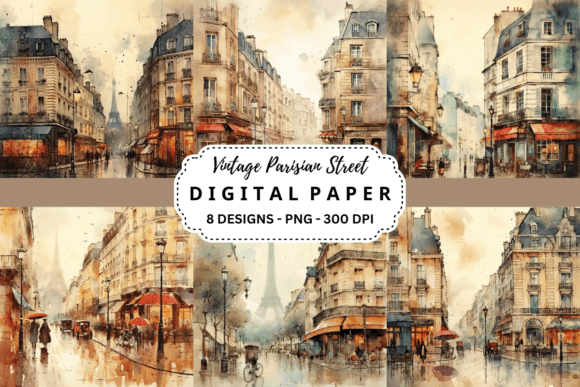
A truly effective background does more than fill space. It sets a mood, tells a story, and provides a cohesive stage for your primary content. The Vintage Parisian Street Backgrounds collection excels at this. Each of the eight individual PNG files is a carefully composed scene, rendered at a substantial 3600 x 3600 pixels and 300 DPI. This resolution is critical. It means the images are print-ready, offering the sharp detail needed for large-format prints, high-end invitations, or commercial packaging without any loss of quality. The “vintage” aesthetic is key—it’s not about outdated visuals, but about a specific character: soft, slightly desaturated color palettes, authentic architectural details, and a sense of lived-in history that modern, sterile stock photos often lack.
This style works because it feels curated and intentional. Imagine a social media post for a boutique fashion brand. Using one of these backgrounds instantly places the product within a context of classic style and quality. It’s a subtle but powerful form of visual storytelling. The personality is one of understated elegance, nostalgia, and artistic flair. It appeals to an audience that values craftsmanship and authenticity, making it a superb design asset for brands and projects aiming to connect on a deeper, more emotional level.
Strategic Applications: From Digital Screens to Physical Products
The true value of these assets lies in their adaptability. As a creative font pairs with text, these backgrounds pair with your core message across a multitude of formats. Let’s break down where they shine brightest.
Digital & Brand Presence: In web design, a subtle, textured background can add depth and prevent a site from feeling flat. These Parisian scenes can serve as hero image backgrounds for landing pages, especially for travel blogs, lifestyle brands, or boutique e-commerce sites. For social media graphics, they are invaluable. Use them for Instagram story templates, Facebook cover photos, or as consistent backdrops for quote graphics. The uniform size and style across the eight images allow for easy creation of a cohesive visual feed, strengthening brand identity through recognizable aesthetics.
Print & Physical Products: This is where the 300 DPI resolution truly proves its worth. For poster & banner design, whether for an event, a retail space, or a gallery, the backgrounds provide a professional, high-end foundation. They are perfect for invitations card design—think wedding stationery, gala invitations, or even elegant business event invites. The vintage Parisian theme lends itself beautifully to scrapbooking and personal memory-keeping. For entrepreneurs, the applications in print on demand design projects are extensive: think notebook covers, tote bag prints, phone cases, or wrapping paper patterns. The commercial license often included with such premium assets allows for this kind of scalable use.
Making It Work: Practical Guidance for Designers and Creators
Having a great asset is one thing; using it effectively is another. Here’s how to integrate these backgrounds seamlessly into your workflow.
- Evaluate Project Fit: First, ask if the vintage, elegant Parisian mood aligns with your project’s core message. It’s ideal for brands in fashion, beauty, gourmet food, travel, publishing, and artisanal goods. It might be less suitable for projects requiring a hyper-modern, minimalist, or overtly playful aesthetic. Context is everything.
- Master Font Pairing: The background’s style will dictate your typography choices. Avoid overly ornate or similarly vintage script font styles, which can create visual clutter. Instead, opt for clean, readable typefaces that provide contrast. A classic serif font for headlines can complement the traditional feel, while a simple sans serif font for body text ensures clarity. This balance is a cornerstone of good editorial design and logo design.
- Test for Readability: Always place your text over the image and check its legibility. The varied tones in a street scene can sometimes interfere. A simple solution is to add a semi-transparent overlay (a soft white, cream, or even a muted color from the image’s palette) behind your text block. This creates a clear hierarchy and improves readability without sacrificing the background’s charm.
- Leverage the Collection: Don’t just use one image. Having eight distinct but stylistically unified backgrounds allows for versatility. Use one for your main logo presentation, another for social media posts, a third for packaging design, and so on. This builds a cohesive brand identity across all touchpoints, a key factor in professional and recognizable design.
In the end, these Vintage Parisian Street Backgrounds are more than just files. They are a bridge to a specific aesthetic, a tool for instant mood-setting, and a professional-grade resource that can elevate everything from a personal blog to a commercial product line. By understanding their visual language and applying them with intention, you tap into a timeless source of inspiration that can make any project feel more thoughtful, authentic, and engaging.